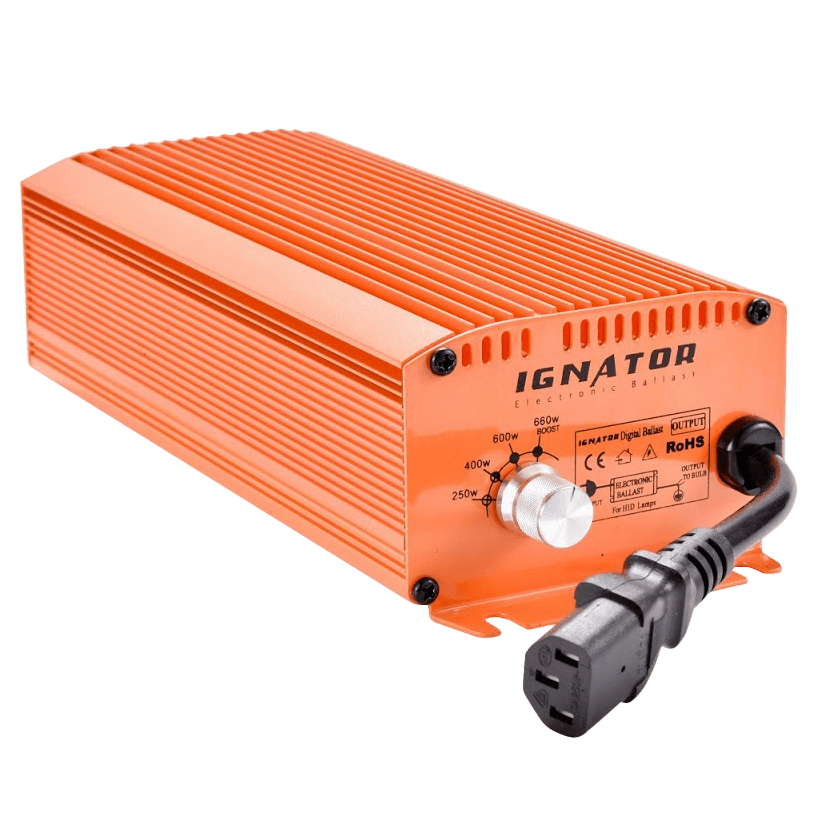
What is an electric ballast
An electronic ballast uses a semiconductor circuit in the case of electronic models, or a coil in magnetic ones, to control the starting voltage and current of lamps or lighting systems.
What is an electrical ballast used for?
These components are used to regulate the electrical current consumed by lamps or lighting systems from a power source. They also provide the output voltage required by the lamp they are connected to.
What are ballasts made of?
Ballasts are composed of three clearly differentiated parts:
-
Core: In magnetic ballasts, this is the most important part and one of the key elements that enables the ballast to function. It is made of thin silicon steel sheets, around which the winding is coiled to form a coil. In electronic ballasts, this function is carried out by semiconductors and other electronic components.
-
Housing: The outer layer that enclves and protects the ballast. Two or three wires extend from the winding and connect to the external circuit.
-
Sealing compound: Located between the housing and the core, made of polyester, its function is insulation.
At what frequency does an electronic ballast operate?
Generally, electronic ballasts increase the operating frequency to 20 kHz or higher. This eliminates the flicker produced at 100 or 120 Hz, making it imperceptible. Additionally, lamp efficiency increases by around 9% above 50 kHz. This increase in frequency improves the overall energy efficiency of the lamp-ballast system, directly impacting crop performance.
How electronic ballasts work for cultivation
These ballasts use semiconductors and electronic components to regulate and control the voltage supplied to the lamp. These components can generate heat, so proper ventilation is recommended during installation.
Types of ballasts on the market
Ballasts can be classified into two types: traditional magnetic ballasts and electronic ballasts, which are built using electronic components.
Electronic vs magnetic ballast: differences and advantages
Ballasts stabilize and limit the current of lamps and lighting systems. They have always been an essential component in indoor growing setups.
Magnetic ballasts, also known as conventional ballasts, operate at a fixed power level depending on the lamp used. They tend to generate more heat, take longer to restart, and consume more energy during ignition.
Electromagnetic ballast technology has been used for years, while electronic ballasts are more recent. Electronic ballasts provide continuous light output, eliminating flicker and allowing crops to receive up to 30% more usable light.
Electronic ballasts allow power regulation via built-in selectors, while magnetic ballasts have fixed output and must be positioned carefully to avoid damaging plants.
Magnetic ballasts are suitable when grid voltage is unstable, as they can operate under lower voltage conditions. However, they are less efficient and do not stabilize output. Electronic ballasts stabilize input voltage, but may fail below 190V or be damaged above 270V.
How to choose a ballast for growing
To select the right ballast, consider the type of lamp you will use. Fluorescent, LED, and CFL lighting do not require a ballast. However, MH and HPS lamps do require a magnetic or electronic ballast matched to their wattage.
Not all ballasts are compatible with all lamps, and quality varies. Choosing the right ballast will directly impact your crop performance.
Best ballasts for growing
Ignator offers a wide range of high-quality ballasts. Notable models include: Ignator BeastBox 600W Electronic Ballast, Ignator 2.0 600W Open Electromagnetic Ballast, Ignator 2.0 600W Closed Ballast, Ignator FoxBox, and Ignator DragonBox.
Ignator BeastBox, FoxBox, and DragonBox electronic ballasts are specifically designed for HPS and MH lamps. They are reliable, affordable, quiet, and efficient for indoor growing. They provide stable and uniform light thanks to reduced power loss.
The Ignator 2.0 600W Open electromagnetic ballast is suitable for both beginner and professional growers. It is safe and compatible with HPS and MH lamps.
The Ignator 2.0 600W Closed ballast is commonly used in greenhouse and small-to-medium indoor setups where it is installed separately from the lamp and reflector.
Installing a grow ballast
To install a ballast, first disconnect the lamp from power. Remove the acrylic panel and fluorescent lights, then cut the wires connected to the ballast, keeping cuts close to it.
Hold the ballast and remove the wire nut securing it. Pull the front down and dispose of it properly.
Insert the new ballast into the holder, secure it, and strip about half an inch of insulation from each wire. Connect matching colored wires from the new ballast to the existing wires.
Twist wire pairs clockwise using pliers, secure them with wire nuts, and repeat until all wires are connected. Reinstall the lights and acrylic panel, then turn the power back on.